
Arcjet Himalia 1: नया Prompt Injection Model क्या करता है और उसे कैसे टेस्ट करें
English version: Read this article in English
5 नवंबर 2026 को Arcjet ने बताया कि उसका prompt injection detection अब Arcjet Himalia 1 पर चलता है। यह Qwen3-0.6B से fine-tune किया गया उसका अपना model है। यह उन सभी SDK calls के लिए लाइव है जो prompt injection detection इस्तेमाल करती हैं, यानी मौजूदा users को code बदलने की ज़रूरत नहीं। Arcjet ने दो specialist models भी बताए, coding agents के लिए Thebe 1 और autonomous security agents के लिए Carme 1, पर वे सिर्फ़ early access में हैं। यह गाइड बताती है कि घोषणा में क्या है, scores क्या साबित करते हैं और क्या नहीं, और असली users को ब्लॉक किए बिना model को कैसे टेस्ट करें। यह Arcjet की अपनी launch post और docs पर आधारित है, जिन्हें 5 नवंबर 2026 को देखा गया।
क्या बदला
Arcjet के अनुसार पहले का detection दो open-source classifiers को जोड़कर बना था, जिनमें false positives और false negatives की शिकायतें आती रहती थीं। Himalia 1 उनकी जगह लेता है। अपना model बनाने के तीन कारण Arcjet देता है: बहुत कम prompt injection models commercial इस्तेमाल की अनुमति देते हैं, public datasets आपस में काफ़ी overlap करते हैं और कभी एक ही prompt को दो तरह से label करते हैं, और datasets इस पर असहमत हैं कि "attack" क्या है।
Himalia 1 कैसे बना है
Arcjet के वर्णन के अनुसार यह Qwen3-0.6B का full fine-tune है, LoRA adapter नहीं। Qwen3-0.6B Apache 2.0 license वाला 0.6 अरब parameters का model है। इसके text-generation output की जगह दो-तरफ़ा classification head (benign या injection) लगाया गया है। नतीजा एक frontier model से लगभग हज़ार गुना छोटा है। Arcjet का तर्क है कि classifier text को एक बार पढ़ता है, एक label देता है, और एक ही input पर वही जवाब देता है।
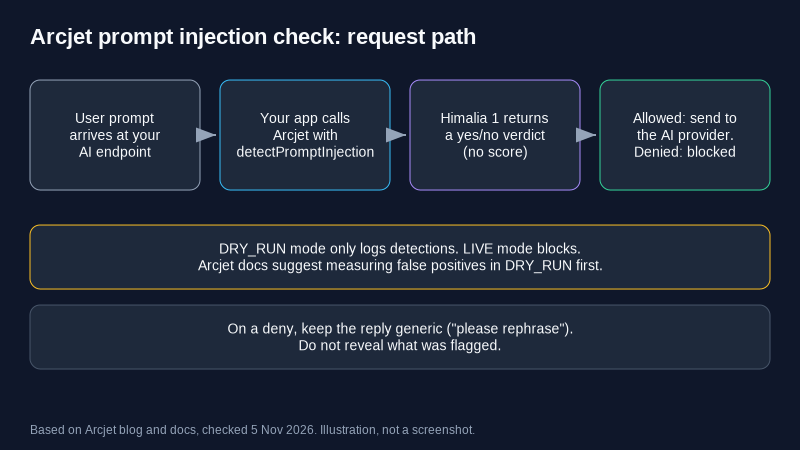
दो production बातें जानने लायक़ हैं। Arcjet base64, ROT13 और hex जैसे encoded text के लिए deterministic decoders चलाता है और decoded text को original के साथ model को भेजता है। और नतीजा score नहीं, verdict है। Arcjet कहता है कि score attackers को feedback देगा कि payload कैसे बदलें, और model दोबारा train होने पर score बदल जाएगा।
Vendor के बताए नतीजे
Arcjet ने दो public datasets पर नतीजे छापे:
| Dataset | F1 | Precision | Recall | False positive दर | False negative दर |
|---|---|---|---|---|---|
| neuralchemy/Prompt-injection-dataset | 0.964 | 0.969 | 0.958 | 0.044 | 0.042 |
| jackhhao/jailbreak-classification | 0.971 | 0.978 | 0.964 | 0.024 | 0.036 |
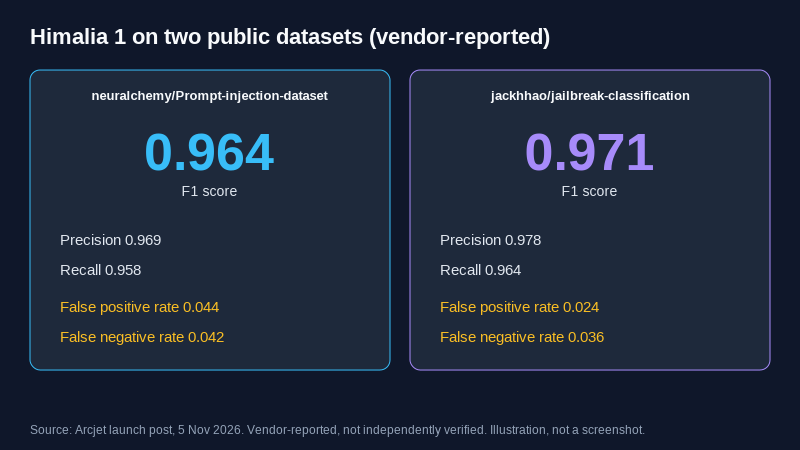
इन्हें vendor के आँकड़े ही मानें। Arcjet कहता है कि उसने training से वे rows हटाईं जो evaluation sets में भी हैं, और अपने proprietary data पर भी टेस्ट किया, पर वे नतीजे छापे नहीं गए। वह यह भी चेताता है कि public datasets काफ़ी overlap करते हैं, इसलिए छपे scores नए input पर accuracy को बढ़ा-चढ़ाकर दिखा सकते हैं। 4.4% false positive दर का मतलब भी लगभग हर तेईस में से एक सामान्य prompt का flag होना है, इसलिए अपने ही traffic पर टेस्ट करें।
सुरक्षित तरीक़े से टेस्ट कैसे करें
- पहले DRY_RUN इस्तेमाल करें। Arcjet के docs के अनुसार
mode: "DRY_RUN"detections को log करता है, ब्लॉक नहीं करता।"LIVE"पर जाने से पहले false positives नाप लें। - इसे code में configure करें। Docs कहते हैं कि detection को request body चाहिए, इसलिए यह सिर्फ़ SDK में चलता है, remote rule नहीं बन सकता।
- Verdict पढ़ें। JavaScript में
decision.reason.isPromptInjection()इस्तेमाल करें। threshold लगाने के लिए कोई confidence score नहीं है। - Denial का जवाब सामान्य रखें। Docs सुझाते हैं कि बस "कृपया अपना संदेश दोबारा लिखें" कहें, यह न बताएँ कि क्या flag हुआ।
- Latency का हिसाब रखें। Docs, जो Himalia launch से पहले के हैं, कहते हैं कि detection हर request में लगभग 100 ms जोड़ता है। अपने app में खुद नापें।
यह एक परत है, पूरी सुरक्षा नहीं। इसे हमारी vibe coding security checklist के साथ इस्तेमाल करें, और याद रखें कि agents को tool results और fetched pages में भी injected content मिलता है (पृष्ठभूमि के लिए हमारा MCP explainer)।
Himalia, Thebe और Carme
- Himalia 1: सामान्य chatbots और model endpoints के लिए। यह सतर्क है, इसलिए SQL, shell commands या "अपने instructions print करो" संदिग्ध माने जाते हैं।
- Thebe 1: coding agents के लिए, जहाँ SQL और shell commands सामान्य काम हैं और जोखिम उस चीज़ में है जो agent खुद खींचता है, जैसे tool output या fetched pages। Early access।
- Carme 1: CVEs और advisories पढ़ने वाले autonomous security agents के लिए, जिनमें attack वाले शब्द स्वाभाविक रूप से भरे होते हैं। Early access।
मेरी राय
यह vendor की घोषणा है और scores भी vendor के हैं, और मुझे अभी कोई स्वतंत्र टेस्ट नहीं मिला। फिर भी design समझदार है: request path में छोटा और तेज़ classifier, score की जगह verdict, और dry-run mode। अगर आप पहले से Arcjet इस्तेमाल करते हैं, तो एक हफ़्ते DRY_RUN में log करें, flagged prompts को असली traffic से मिलाएँ, और तभी enforce करें।
Sources
- Arcjet blog: Introducing Arcjet's custom AI security models (5 Nov 2026)
- Arcjet docs: Prompt injection detection
- Arcjet docs: AI protection, prompt injection
- daily.dev पर Arcjet post का सार
FAQ
Arcjet Himalia 1 क्या है?
यह Arcjet का सामान्य उपयोग वाला prompt injection detection model है, जो Qwen3-0.6B का full fine-tune है और दो-तरफ़ा classification head वाला है। Arcjet के अनुसार यह prompt injection detection इस्तेमाल करने वाली हर SDK call के लिए लाइव है।
क्या Himalia 1 पाने के लिए code बदलना होगा?
Arcjet के अनुसार यह हर उस SDK call के लिए लाइव है जो prompt injection detection इस्तेमाल करती है, यानी मौजूदा integration को यह अपने-आप मिलता है। बदलाव के बाद अपने logs ज़रूर जाँचें।
क्या Thebe 1 या Carme 1 आज मिल सकते हैं?
खुद से नहीं। Arcjet दोनों को early access बताता है और coding-agent व security-agent बनाने वाली टीमों से संपर्क करने को कहता है।
क्या 0.964 और 0.971 F1 scores स्वतंत्र रूप से जाँचे गए हैं?
नहीं। ये दो public datasets पर vendor-reported हैं। ब्लॉक करने से पहले DRY_RUN mode में अपने prompts पर model टेस्ट करें।